

Bittles‘ Magazine | Interview: Mat Playford
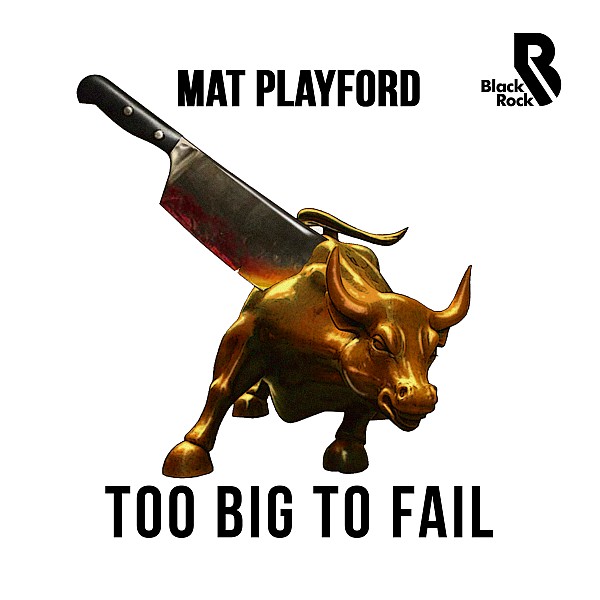
Fans of deep, groovy house music with a warm Balearic twist are in for a real treat this month in the form of ›Too Big To Fail‹, the sparkling new album by dance music icon Mat Playford. The record is made up of eleven lush tracks and is a calm, sedate affair whose laid back feel betrays a razor-sharp political edge. When you combine this with Mat’s gleeful will to experiment and constantly push past idle genre restrictions it makes the album one of the most stimulating and engrossing of the year. By JOHN BITTLES
 Having spent over twenty years creating and playing house music, Mat Playford is a name which should be instantly familiar to those who have been lucky enough to hear one of his tracks, or DJ sets. Having created his first working studio in his teens, he developed under the mentorship of Sandy Rivera and Angel Moraes who recognised Mat’s talent and enthusiasm and took him under their wing. Later in his career he set up the (now sadly defunct) Play Music record store and has collaborated with such luminaries as Paul Woolford, Darren Emerson, Pete Herbert, Tim Deluxe and many more.
›Too Big To Fail‹ explores a myriad of styles across its eleven tracks including Balearic, drum & bass, chill-out, proto-house, and many more. It’s a gloriously laid back affair that, through superior musicianship and meticulous use of samples, manages to shock, surprise and delight. This is illustrated perfectly in opening track ›Ponzi Scheme‹ which begins with a funky house backing accompanied by a wonderfully political vocal line before it suddenly explodes into some LTJ Bukem-style drum & bass.
Second track ›Quasi Debt‹ contains gorgeous synth washes, and a melody line so sweet and innocent sounding it could easily reduce a grown man to tears. Tracks like ›Keynesian Fears‹ and ›21st Century Serf‹ continue this hushed melancholy theme which dominates the album so well. To say that they wouldn’t sound out of place on an old ›Café Del Mar‹ CD as compiled by Jose Padilla back in the day really wouldn‘t be that far off the mark.
In contrast, tracks like ›Hi Frequency Trading‹ take things in a dark, clubby direction with hints of Detroit techno colliding elegantly with the ghostly echoes of rave. ›Hyperinflation‹ meanwhile sounds like an old ›Planet Dog‹ record and continues the political theme at the heart of many of the albums songs. The eruption of jungle-style beats towards the half-way mark illustrates how, even in moments of tranquillity, thoughts of the dancefloor are never that far away.
It is the sense of bittersweet warmth that holds the whole album together though, and makes it much more than a disposable DJ tool. To say that the tracks are timeless-sounding may be a bit clichéd, yet, this distinction somehow seems right. There are no dubstep wobbles, or diversions into bass music to mark it out as a product of 2014. But this is a good thing! You will enjoy listening to this in five years time just as much as you would today. And how many recent albums can you say that about? Eh?
 In the short interview below Mat discusses the new album, his love of music, aerobics classes, and lots more.
By way of introduction, can you tell us a bit about who you are and what you do?
I make and play music – I think that sums me up pretty well.
Your new album ›Too Big To Fail‹ is out on the 6thof July. How did the album come about?
I started the project back in 2012 and just wanted to make something a bit different using my old school ways. I had taken back to the studio a few bits of equipment I hadn’t used in a while and allowed the creativity to take its own course.
You’ve been a prominent figure in the dance music scene for over 20 years now. Yet this is your debut album. What took you so long?
I actually put out a double CD with ›We Love Ibiza‹ in 2011, so it’s not my first. I have also made many others but, I am a strong believer in developing your skills and not putting out any old thing so they never saw the light of day.
The dirty dance floor funk of ›Ponzi Scheme‹ is a real highlight for me. Can you tell us a little bit about this track? And, where did the ›Ponzi Scheme‹ sample come from?
›Ponzi Scheme‹ sets the tone of the album from the start and allows the pace and message to evolve following it. There is a clear message throughout the album but it’s a message I would like people to work out for themselves. The lyrics on ›Ponzi Scheme‹ are »Now you’re watching the European markets unravel and the boys are pumping trillions of dollars to keep the ponzi scheme«; it comes from a podcast of a guy that only can be described as a prophet of doom.
What equipment/hardware did you use to create the album?
Way too much to mention but let’s just say over 20 different keyboards from the 80’s.
What’s your favourite synth?
It has and will probably always be the Moogs, and the Roland Jupiter’s /Juno’s.
How does the music on the album differ from your previous single releases?
I’d say it is very different but I think it’s up to the listener to define what that is, we all hear things in different ways.
For me, there is a real air of calmness and tranquillity to the album, even through the variations of pace and style. Was this the plan?
100%. Even though there is a varied style throughout the tracks I wanted them to have the same vibe. For me, that is what making albums are about.
When did you realise that rather than making a collection of individual tracks you were making an album?
From day 1 really as I had actually chosen the track names before I made the music. The writing followed and the vibe progressed as I continued to formulate it into a finished album.
Do you have any plans to tour the album?
Yep, just working on the final details now!
What will the live set up be?
It will be a collection of synths and maybe a modular.
Who or what was it that originally got you into house music?
I have always loved electronic music for as long as I can remember, I’ve just grown up with it around me. From 5 years old and being the tape operator in an aerobics class to owning a record shop – I could go on but it has simply been there since the beginning.
If someone said to you that they really didn’t like house music what track would you play them to change their mind?
That’s a very hard question and pretty tough going with just one tune but I think I’d have to say, Marshall Jefferson »Move Your Body«. For me it really started with that record, even though on the commercial side of house it’s very early, it still gets a great response.
What was it that made you decide that you were going to produce music?
It’s hard for me to write down things like this because I could name you hundreds of things that made me do it. But, I just love music and I love keyboards so it seemed like the right thing to do.
And DJ?
Same thing applies to technology when it comes to DJing, I love it.
If you could change one thing about the music industry today what would it be and why?
I’d like to see people do it a bit more for the right reasons!
The album is out on ›Black Rock‹ on the 6th of July and I suggest that you hassle your local record shop staff by pre-ordering a copy now. For those who really can’t wait that long head over to https://soundcloud.com/mat-playford/sets/too-big-to-fail for a sneaky listen now.
| JOHN BITTLES