

Musik | Ornette Coleman: Ornette!
Zeitreise ins Jahr 1962 des Free Jazz: Vor 55 Jahren veröffentlichte Ornette Coleman ›Ornette!‹. Ein Rückblick von TINA KAROLINA STAUNER
 »Turning first to Freud, we find that poetic imagiation and creativity are typically presented in terms of phantasy, daydreams and nocturnal dreaming.« (aus ›On Poetic Imagination: Sigmund Freud and Martin Heidegger‹, ›Freud and the Artist‹, Sunnie D. Kidd)
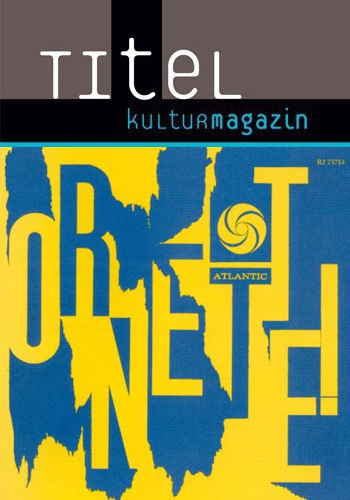
Eintauchen in die Vergangenheit: Folge den Saxophonmelodien von Ornette Coleman… Nimm beispielsweise, selbst wenn aus seinem beeindruckenden, voluminösen Oevre, das eher weniger spektakuläre ›Ornette!‹, herausgebracht im Jahr 1962. Gelbtürkisfarbenes abstraktes Cover mit experimentellem Ornetteschriftzug. Mitmusiker von Ornette Coleman (1930 – 2015) waren bei den Aufnahmen 1961 Don Cherry, Scott LaFaro, Ed Blackwell. Free Jazz auf der Schwelle zu Harmolodics. Musikstücke mit zwar traditionsbezogenen Elementen doch im Grunde konsequente Innovation. Wie nur Monate vorher u.a. mit den Aufnahmen zu »Free Jazz« begonnen worden.
»Something quite different is happening…«
Ornette Colemans Saxophon war vom ersten Hören an für mich etwas Entscheidendes, Essenzielles, wofür es keine Alternative gibt und wahrscheinlich auch nicht geben wird. Da passiert etwas Unersetzbares in einem ganz besonderen, zeitlosen Raum. Anders die sozusagen einfach cool zu sein scheinenden Baß-, Schlagzeug- und Trompetensoli der Band, die wie eine hübsche Zeitreise über Jahre zurückwirken. ›Ornette!‹ war das 7. Album des Musikers.
Natürlich sind wir immer einerseits in die-Geschichte-wiederholt-sich-selbst… In der Harmolodic Colemans jedoch herrscht andererseits eine andere Zeitrechnung, gelten andere Gesetze. »I’ve known people of whom it can be said they have never lost their sense of rage. But rarer, and therefore more in tune with the life forces of the universe, are those like Ornette, who have never lost their sense of wonder«, schreibt Nat Henthoff auf dem Cover. Die Songtitel von ›Ornette!‹ sollen Abkürzungen sein, die sich auf Veröffentlichungen Sigmund Freuds beziehen: ›Totem and Taboo‹, ›Wit and its Relation to the Unconscious‹, ›Civilization and its Discontents‹ und ›Relation of the Poet to Day Dreaming‹. Jazzer waren und sind immer wieder Tagräumer in ihrer Eigenwelt voller Wunder.
»Freud distinguishes between two different ways of beeing a poet: 1) there ist the poet who takes over the material ready made for the work to be created 2) there is the poet who creates material for the work spontaneously.« (Sunnie D. Kidd) Mit seiner Musiktheorie Harmolodics wagte sich Ornette Coleman sogar an eine eigene Musikästhetik und Musikpoesie.
»It interests me more to have a human relationship with you than a musical relationship. I want to see if I can express myself in words, in sounds that have to do with a human relationship. At the same time, I would like to be able to speak of the relationship between two talents, between two doings. For me the human relationship is much more beautiful, because it allows you to gain the freedom that you desire, for yourself and for the other.« Mit diesen Worten endet das Interview, das Jacques Derrida am 23. Juni 1997 mit Ornette Coleman in Paris führte. Coleman hielt sich damals im La Villette auf, einem Museums- und Aufführungszentrum und brachte Stücke im Trio, mit Prime Time und mit Orchester auf die Bühne.
Am 26.11.15 war er damit beim Jazzfestival Saalfelden auf der Bühne.
Der Poststrukturalist und Dekonstruktivist Jacques Derrida konnte ihm im Gespräch, das als ›A Match Made In Heaven‹ zu lesen ist, »brilliant little nuggets« entlocken. Colemans Musikphilosophie ist auch eine Weltphilosophie.
Ornette Coleman: Ornette!
Rhino (Warner)
| Erwerben Sie diese CD portofrei bei Osiander