

Music | Bittles’ Magazine: The music column from the end of the world
Sometimes, when everything seems too frantic and stressful, what we all need is something to take the sting out of life. Scott Gilmore is one of a rare breed of producers who makes music perfect for this. Using a myriad of influences and genres, his songs blend elements of ambient, krautrock, pop, library music, house, funk and more to create a rich kaleidoscope of sound. Light and airy, yet containing gentle, club pleasing beats his debut release from last year, Subtle Vertigo, has a timeless quality which seems to enrich your very soul. By JOHN BITTLES
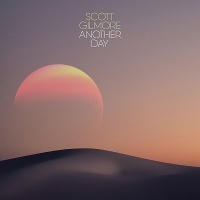
This month the Los Angeles based artist returns to Mark Barrott’s International Feel label with the delicate grooves of the Another Day EP. Composed of four short, yet fully realised tracks, the record is a welcome reminder of just how warm and welcoming good music can be. Opener, Electric Gestures merges fragile percussion with a tender melody to winning effect, while Things Forgotten sounds like a long-lost, yet cherished record playing in the background of your mind. Flip over for the dreamy ambiance and thoughtful melancholy of Lately, setting things up nicely for the sun kissed swoon of the title track to bring things to a satisfying end.
With Another Day receiving repeated plays on my laptop I knew I had to find out more about the creator of the EP. In the following interview Scott Gilmore discusses Another Day, the Subtle Vertigo mini LP, his use of guitar in his music, influences, working with International Feel, and lots more.
So, take a deep breath, have a listen to the EP here, and let us begin…
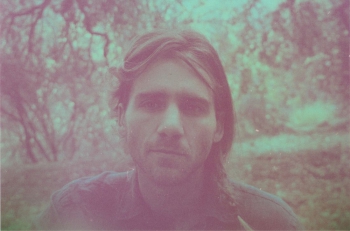
For those who have never had the pleasure of hearing your music, can you tell us a bit about who you are and what you do?
I make music using synthesizers, drum machines, electric bass, and acoustic and electric guitars. I try to write music that is both beautiful and engaging. I enjoy writing many melodies, harmonies and counter melodies into my compositions to develop a sense of forward motion. My main influences include Brain Eno, Cluster, Kraftwerk, Stereolab, Talking Heads, YMO, ‘70’s and ‘80’s Ethiopian Music, J.S. Bach, and the out-takes from the Beach Boys‘ Smile Sessions.
Your new EP Another Day came out on the 9th of February. Why do we all need this record in our lives?
I think the music on the record presents the listener with some new musical ideas through compositional techniques and unconventional recording methods and instrumentation. At the least, it presents many different sonic textures.
If you had to pick one song to sell the EP, which would it be and why?
Another Day. That song is filled with several counter melodies and harmonies, making it a very interesting listen. When mixing it, there were sections in which I couldn’t actively hear every part simultaneously. Since the melodies move in many different directions, it would take multiple listens to actually hear the song as a whole. I think this quality makes the song very engaging as it may sound different every time.
In the press release you say “Before recording the songs for ‘Another Day’ I had never worked on music with the knowledge that it would be released.” How did this affect the creation of the EP?
It was a challenge learning to put the knowledge that the songs would be released out of my mind. While recording, I had to extinguish thoughts about how something would be perceived by someone else. If I were to base my decisions on my imagination of what other people may think about a certain idea, I would only end up further away from my individual relationship with the music. To me, the point of recording anything is an attempt to document my own understanding of how I’d like something to sound. With the knowledge that these songs would be released, I felt the real need for them to exist in a finished state. It made me feel an invigorated sense of productivity. I found myself exploring more within each recording, and trying out many different ideas. There are several different versions of every song on the record.
Opener Electric Gestures is beautifully sedate. Can you tell us a bit about how it came about?
I programmed a rhythm into an Akai MPC1000 using samples from a Sakata DPM48 drum machine. I then sent signals out to an Arp Odyssey, which plays the dotted synth hits at the beginning and continues through the song. That really drove the whole thing. From there I used an organ to play the lower, subterranean chords. The B section is inspired by Ethiopian music. The organ, which plays quick rhythmic notes, set the framework for what that part would become. The layered synth melody that slowly enters during that section was an experiment with implementing four-part writing into my music. I was trying to follow basic rules of voice-leading procedures and that is how I ended up with those notes.
Another highlight is Things Forgotten which features soft melodies and gently plucked strings. How important is your background in guitar to the music that you make?
I think my background in guitar has significantly shaped my creative process. When I started learning to play, my teacher would have me bring my favourite CDs and we would work together learning the songs by ear. I think this method was effective in making all music accessible. I was never forced as a child to study scales or learn theory, so my initial relationship to music was always a feeling of freedom and exploration. I enjoy using the guitar to compose because I still approach music with this sense of naiveté. I don’t think about theory or chord progressions while writing. I often try to integrate new chords into my songs by making shapes with my fingers. I later studied classical piano and music theory, which is very helpful for harmonizing melodiesand making sense of what I’ve done. Things Forgotten was recorded using a classical guitar which was missing the D-string. Because of that I tuned the instrument to some combination that sounded nice to my ears. This sense of exploration and lack of “rules” is rooted in my background in guitar.
The title track closes Another Day with a suggestion of optimism rarely found in music these days. Who or what inspires you to create?
Initially, I am compelled to record because I enjoy playing music and especially I enjoy experimenting with layering sounds. But, what keeps me returning to the studio and maintaining a creative practice is more related to happiness. There are times in the studio when I forget that I exist. I become completely absorbed by recording and forget about myself; focusing so intentlyon the sound of an oscillator passing through a filter. It is a very absurd, existential feeling to step back in that moment and ask why – to wake up to yourself after hours on end in the same room, with nothing but your own voice telling you “this sounds good!” But it’s for those moments before realizing what I am doing that I continue to create.
How does Another Day compare to the excellent Subtle Vertigo which came out in June last year?
I think overall the sound quality on Another Day is slightly richer and brighter, yet still maintains a subdued feeling to it. I had recently finished building a modular synthesizer and I was experimenting with the sounds it can create. I think the synth harmonies during the chorus of Electric Gestures are a good example of this new sound.
The record is released on Mark Barrott’s International Feel label. How did you first hook up with the good people there?
Mark “Frosty” McNeill, DJ and co-founder of Dublab, had heard my album Volume 01 and reached out to me asking to hear more. After finishing a collection of songs which would become Subtle Vertigo, I sent them to Frosty. He offered to reach out to a few labels on my behalf. International Feel was one of them.
What’s the best thing about working with International Feel?
 I appreciate how direct Mark Barrott is and how smoothly the label operates. I also appreciate that being a musician and producer himself he has an ear for production and will offer upcritiques of my work. It is helpful to get an outside perspective as it is easy to lose sight of a song after months of hearing it in the vacuum of creation.
When you look back over your previous releases can you think of a thread, idea, or a sound that unites them?
I spent a lot of time listening to music which was recorded onto tape – home recording artists like the early Ariel Pink recordings, R. Stevie Moore, and bootlegged Ethiopian cassettes. I think my ears have developed a preference for softer tones. I think this quality of softness is present throughout my releases up to this point.
What does the future hold for yourself?
I plan to continue experimenting with many different musical ideas, recording new material, releasing albums, and touring.
Do you have any final words for our readers?
There is a label based in Antwerp, Belgium called Ekster, which is releasing a wide range ofskilfully curated electronic music – from experimental jazz piano, to minimal melodic electronics and on their most recent release EX03 (a compilation record) some tracks verge closely in sound to experimental classical. Definitely worth checking them out.
Another Day is available now in all good record stores. For those who don’t like leaving the house though you can also purchase the EP here and here. Enjoy!