
In this wide-ranging interview with RUDOLF THOMAS INDERST, Pim’s Crypt discusses the move from Swedish to English, the power of horror games to deepen empathy, the limits of algorithm-driven platforms, and why curiosity matters more than scores.
Rudolf Thomas Inderst: Pim, for readers who may not know you yet: who are you and what do you do online?
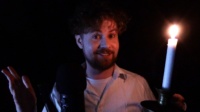
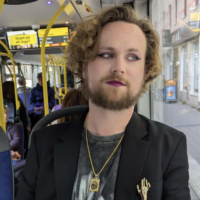 Pim’s Crypt: A queer swede making videos, video essays and podcasts about most things horror, primarily within the mediums of film and video games.
You’ve been producing reviews and essays about games for more than a decade. Early on, much of your work was in Swedish, but in 2020 you decided to switch to English. What motivated that change?
I loved doing all of that work. I even got paid for some of it, but therein was my problem. I didn’t want all that work to be a simple hobby, I wanted it to be a reliable source of income. Because if I could live off my writing and video producing, I would have time to make it better, dive a little deeper, and work on longer projects I’ve always dreamed of. That was never going to happen if I kept writing solely for my national audience. It might not happen now that I’ve switched to an international audience either, but the chances are at least higher. Though regardless of what the reason was initially, I couldn’t be happier that I made that switch. I’ve met so many fantastic people because of it, had experiences I never thought were possible for me, and evolved so much as both a critic and a person.
Your channel focuses strongly on the horror genre. What fascinates you so much about horror compared to other areas of gaming culture?
Roger Ebert said that films are „machines that generate empathy“, but I think it’s even more true for video games, and even truer for horror games. Horror games explore the darkest depths of the human experience, but I find that it’s within that darkness that the tiniest light will shine the brightest. Horror games have me not just empathizing but experiencing the pain suffered by complete strangers. They have me confront my own fears head-on. And even in the darkest moments, there is that light. It sparks hope within me, that we can overcome the things we suffer from, the things we fear. Or, at the very least, that we can grow to understand them.
One thing that stands out in your work is that you rarely judge games simply as “good” or “bad”. Instead, you look at artistic intent and what a work is trying to say. Why is that perspective important to you?
I believe the job of a critic is not to dismiss, but to understand. To find meaning. I seldom feel like I get anything out of a review telling me that something is simply good or bad. I’m offended by the existence of numbered scores! What interests me is why something makes a critic feel good or bad, so that’s how I approach my own writing. Even the „worst“ pieces of art contain valuable aspects worthy of observation. To dismiss those is to dismiss the opportunity to potentially learn something. And how absolutely dull would this line of work be if we rejected curiosity?
Horror stories often deal with fear, trauma, and the unknown. What do you think video games as a medium can add to these themes compared to film or literature?
 Video games give you agency, but more importantly they can strip it away. Whether it’s through cutscenes, the temporary or permanent removal of specific game mechanics, or player choices that lock you out of future choices. A game exploring a specific fear might allow general control over its protagonist, but can quickly remove or hinder control when that fear becomes overwhelming. It’s always going to be a tough task to portray complicated topics like trauma through gameplay mechanics, but I find the experimentation alone to be very fascinating.
Your essays often explore the creative process behind games. Are there particular horror games or creators that have shaped your thinking over the years?
There are several games I could credit for making the critic I am today. Alone in the Dark was my first ever horror game, and one of the main reasons I pursued this career. But the game that really shaped me was Deadly Premonition. I was still fairly young when that game came out, around 16, and I was still convinced that „good games“ were all about AAA production values, high fidelity graphics and unanimous 10/10 scores from the big publications. Deadly Premonition obliterated that facade for me. It’s a video game that starts with a pair of squirrels producing monkey noises, as they are about to get hit by a crashing car, and it only gets weirder from there. I fell in love with it instantly, and I couldn’t care less about how old it looked for an Xbox 360 game, how stiff the combat was, or how awkward almost every other aspect of the game felt. Deadly Premonition was the game that taught me that art doesn’t have to follow any rules. It only has to make you feel something.
You have been active on YouTube for a long time. How has the platform changed for creators who want to produce slower, more analytical video essays?
I have to admit I still find it difficult to keep up with all the different ways Youtube is changing the game for us creators. I don’t think anyone who doesn’t have first hand knowledge of what’s going on behind the scenes actually knows just how much Youtube has changed things in the last 13 years, which was when I started. All I know for sure is that it has not gotten easier. Not only is it tougher for me to break through the noise, or for Youtube to even notify my own subscribers of the videos I’m putting out. Many of my friends and acquaintances on the platform, some of which have upwards of hundreds of thousands of subscribers, have had similar issues with visibility as of late. Which makes it even more frustrating that the folks at Youtube are not being transparent about what they’re doing. I will never know if a longform video of mine does badly because of a lack of interest or because it’s being buried by the algorithm. The best I can do is try to not think about it too much, and do what I want to do regardless.
You recently launched a Patreon to support your work. What motivated that step, and how does community support influence your ability to keep producing essays?
 I keep saying at the end of my videos that „this channel wouldn’t exist if it weren’t for the lovely people who support me on Patreon“, and that is and always will be true. I really do love the work I’m doing now, I’m more proud of it than any other creative endeavour, but with a seperate day job it takes a lot of energy out of me. As unfortunate as it is, I’m at a point where a gig like this can’t run on passion alone. Work is work, and boy is this work!
Your Patreon also offers behind-the-scenes posts, podcasts, and movie nights in your Discord “crypt”. How important is this community aspect for your project?
While I honestly still don’t feel fully equipped to deal with all the responsibilities of being the head of a community (they don’t exactly teach you the intricacies of parasocial relationships at Youtube School), I do genuinely love that my work has brought so many people together. Hanging out with my community during our semi monthly movie nights in particular has been some of the most fun I’ve had since I started the channel. Whenever I finally decide to leave the crypt for good, it’ll be the many moments I shared with fans, friends and fellow video essayists that I will remember most fondly.
Finally, what horror games, films, or cultural works are currently inspiring you the most?
Given the current state of the world I’m trying to find solace in radical optimism, rather than succumbing to doomerism. 28 Years Later, and its direct sequel, have been both comforting and inspiring works in that regard. They depict a world that is so far into a post-civilization world, yet there’s still a sense of the human spirit living on and prevailing. They fight anger with compassion, brutality with emotional intelligence, fear with love. And yes, it’s true as they say. The Bone Temple provides the best music video that Iron Maiden could’ve ever asked for.
Thank you very much!
Learn more about our guest right here
| Pim’s Crypt – Youtube-Channel
| Pim’s Crypt – Bluesky
| Pim’s Crypt – Twitch
| Pim’s Crypt – Patreon
| Pim’s Crypt – Leterboxd