

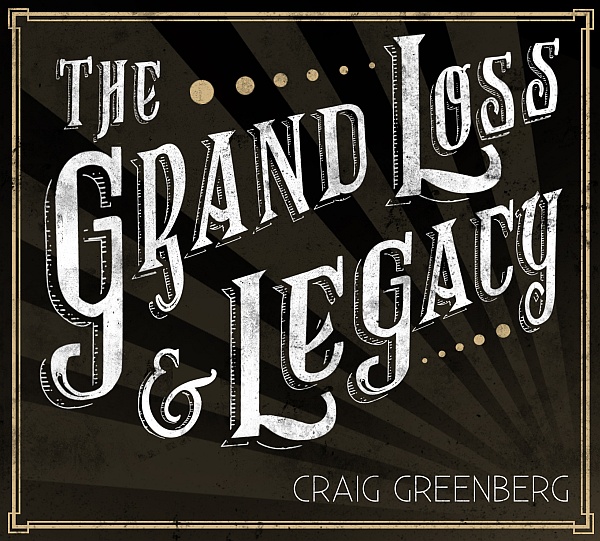
Music | Craig Greenberg: The Grand Loss & Legacy
Tomorrow, New York based musician Craig Greenberg releases his first full length album ›The Grand Loss & Legacy‹. MARTIN SPIESS listened to it.
 One could argue that the era of piano pop is over. That all the Counting Crows, Ben Folds and Jamie Cullums only were phenomena of the 90s and the millennium years and that the rebirth of folk sent the piano to the background. One could exaggerate and say that after Billy Joel you can sit down to play the piano but you won’t (can’t!) make it better.
But – there is always a ›but‹ – on Craig Greenbergs debut ›The Grand Loss & Legacy‹ the majestic sound of big piano melodies flashes once again, rocky and edgy as well as strumming and soft. Although Greenberg dedicated the album to his late aunt and his late mother, there is barely any melancholia on it. On the contrary the album is defined by a (nearly too) optimistic drive. The »grand loss« surfaces in the lyrics of the 38-year old New Yorker, though, when he sings about breakups, which applies to most of the ten songs. After all, the piano almost invites to remember lost loves.
Crystal clear piano, bombastic band
In his best moments Greenberg sounds like the aforementioned gentlemen, especially when catchy melodies sit on top of a bombastic sounding band. Most of the time “The Grand Loss & Legacy” reminds of Ben Folds even when Greenbergs vocals sound like Randy Newman. Yet the overall sound stays the same: a crystal clear piano and a band that is nothing but pompous pop. Only the ballad ›I Should Believe in Someone‹ with its two solo steel guitars has a certain Country flair – and the listener is not imagining himself bouncing through Greenbergs home Brooklyn anymore but rather on a highway in a dusty Chevy, on the way towards the horizon.
Lofty, corny, quixotic
Craig Greenberg’s strength is his dauntlessness: one could argue that there’s kitsch and pathos here and there, but Greenberg doesn’t avoid topics that invite to gush – he looks for them. He dwells on broken love, on warnings about dangerous women and there is not a single moment of doubt, because there is no other way to sing about love: lofty, corny, quixotic. The era of piano pop may be over, yet Craig Greenberg does it like the French cartoon characters Asterix and Obelix: by offering unrelenting resistance. And by releasing a great debut album.