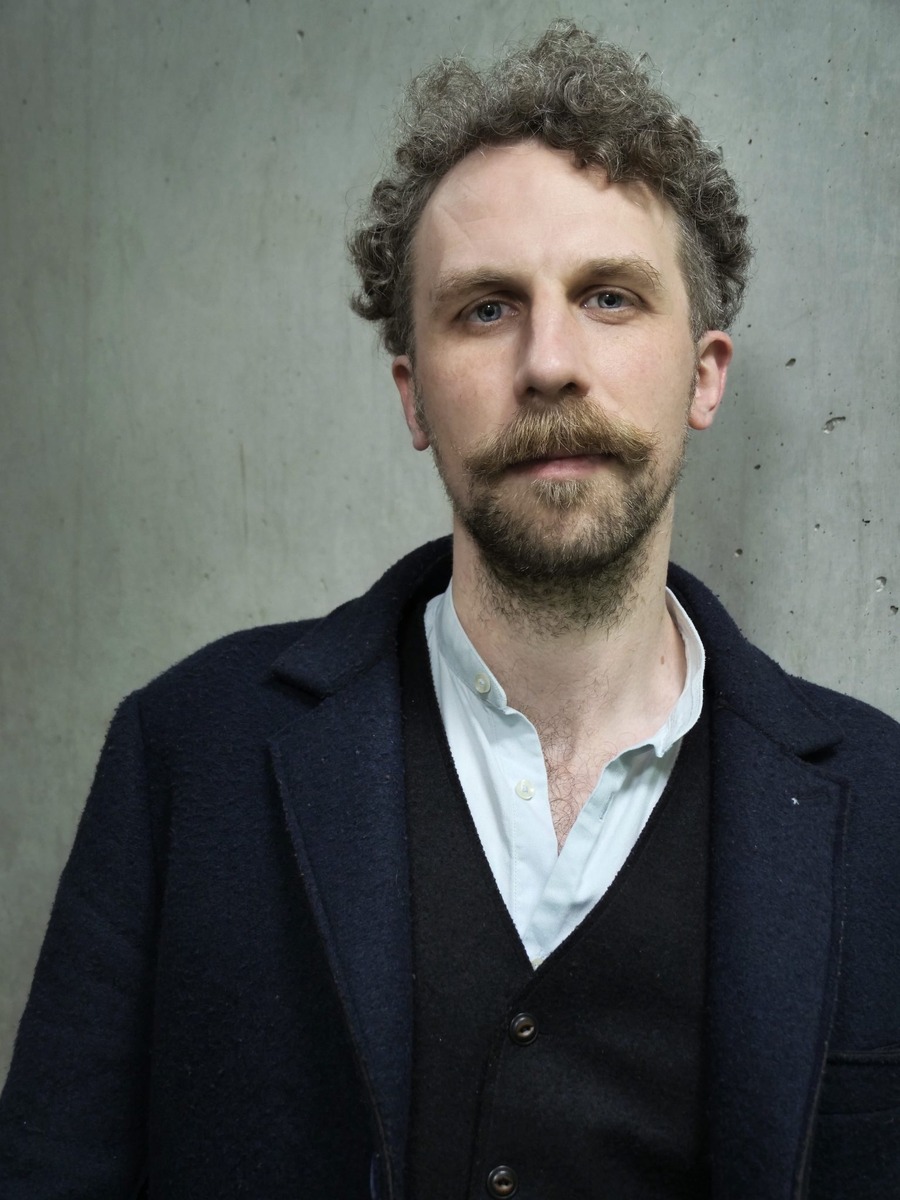


From irreverent humor to sharp cultural critique, Jenna Stoeber blends academic insight with accessible games criticism and insists that games really are “that deep.” In this interview with RUDOLF THOMAS INDERST, she reflects on horror as a lens, creative independence beyond algorithms, and why failure is central to both design and creativity.
Rudolf Thomas Inderst: Welcome Jenna, it’s a great pleasure to talk to you today. Could you please introduce yourself to our readers?
Jenna Stoeber: Hello, reader! I’m Jenna Stoeber, a video essayist and livestreamer. I have a master’s degree in media and culture, specializing in horror media and video game cultures, which I mainly use to make dick jokes on the internet. I used to work on the video team at Polygon, and now I’m fully freelance. My work is academic but accessible, tackling the mechanics, structure, and content of video games and internet culture at large.
Can you describe how your academic background at UW-Madison and your time at Polygon influenced your current approach to games criticism as an independent creator?
 My grad studies completely changed how I thought about media and culture, and not just the parts that I explicitly studied. Every media object has such depth to its history and production, even if it’s just a flyer for a concert you find on a lightpole. Everything is imbued with human meaning and intention! Studying at a higher level gave me the tools and conceptual structures to interrogate that. And it made me better able to reject ideas that are popular, but not accurate – like the idea that “it’s not that deep.” It is that deep! It’s ALL that deep!
When I applied to Polygon, I was one of a handful of people who had studied video games as an academic. I knew I offered a unique perspective – the ability to evaluate games on a structural level. Working alongside so many excellent journalists and writers honed my ability (and desire) to take big, complex, weighty academic ideas and pull them down into videos that are self-contained but not dumbed down. Fundamentally, I believe that anybody can understand the ideas presented in higher learning, even if they can’t always synthesize the ideas themselves. And that’s where I come in!
What initially drew you to horror themes in games and media, and how has your exploration of them evolved from your Polygon essays to your solo YouTube videos?
I was actually inspired to apply to grad school after reading Carol Clover’s Men, Women and Chain Saws, the seminal academic work on slasher movies. (Clover created the concept of the “final girl” in horror). I had been a fan of horror as a kid, but gave it up in high school because it was “low culture.” Reading a serious, academic text that treated slasher movies with respect blew my mind.
I never intended to study horror in grad school; I applied strictly to research video games, another “low culture” object. But there was basically no academic support to study that – no archives, no syllabus of recommended reading. Game studies fundamentally did not exist. Media studies at UW-Madison had a strong emphasis on archival work and interrogating histories, thanks to radio scholar Michele Hilmes and the massive film archive on campus. So I had to study something more well-established in order to participate in historiography classes! Not a lot of film genres crossover with video games, but thankfully horror – my first love – did.
Polygon videos were focused on big games, and horror games were at a low tide while I was there, so I didn’t get to cover them much. Now that I’m independent, nobody can stop me from covering horror movies, or really niche indie horror games like Mouthwashing – things that would have been hard to pitch at a large media site. Plus, I have the freedom to make as many videos about The Wicker Man, even when none of them do well!
What techniques do you use to make complex topics like game design or cultural analysis so engaging and accessible in your typically short video essays?
Dick jokes. It’s a big part of it. Humor makes any topic more accessible, keeps people engaged, and lets them know I’m not taking anything too seriously. An unexpected joke can startle people into paying attention more.
I like to start with a single video game and outline a clear topic or question – one that’s simple to ask but tricky to answer. Things like “why is Indika’s design so realistic but its game elements so intense?” or “why do people love Balatro-style games?” From there, I define what I need to add context on – if I’m talking about gambling culture in games, what history might illuminate how we got here? What psychological or sociological trends would be good to understand? It’s not unlike an academic paper, where the lit review is the brickwork required to stand on solid ground to talk about a topic.
In your podcast „Big Game Hunger,“ you turn simple prompts into full game concepts with guests. What is the wildest idea that has come out of this process, and what does it reveal about your design philosophy?
There were a lot of fun concepts! Brooke Breit pitched swapping out body parts to solve crimes as a Frankenstein. Lily Alexandre and I made an investigation game about discrediting family members to get the best spot in a will. Emmett Watkins Jr had an idea to plant and grow a forest in order to design a platforming level. Jacob Andrews and I made a soup-based soulslike game called Dark Soups. Great stuff all around!
Hopefully the ideas reveal more about the design philosophy of my guests than myself. I wanted the show to be a safe place to explore ideas and impulses, without the anxiety of actually having to produce something. I wanted to remind people that creativity should be fun! It’s not always about actually making something or monetizing every idea. It’s about being free and goofing around and the sheer joy of creativity for creativity’s sake.
In a way, that’s my design philosophy – creativity without the anxiety of production. Creativity is a muscle that gets stronger the more you use it. If you try to follow every idea to fruition, you’ll spend a lot of time not getting better at being creative. Not every idea is worth following through on, and that’s okay!
After leaving Polygon to go independent, what has been the most rewarding creative risk you have taken, and how do you handle or deliberately sidestep social media algorithms?
Freelancing isn’t enough of a creative risk? Maybe that’s more a financial risk. In a way, it all counts as risky because I have no idea how any video will perform. To me, my analysis of Indika was a big swing because I don’t generally do textual analysis. It was different stylistically in ways probably only obvious to me; I had no on-screen appearance, I used a different tone in my voice over, and I edited more for aesthetics than information. But of course, I knew textual analysis videos are popular. And that video did well, so it felt safer to follow it with a textual analysis of Mouthwashing.
There are ways to make videos “safer” for various platforms – I have virally spoken about how and why long videos do better on YouTube. On the other hand, some content creators censor words like sex or kill, and for what? Who is telling them to do that? Nobody. They just think the algorithm will punish them if they use dirty words. Other content creators think putting a lot of cleavage or some other misogynist nonsense in a thumbnail will get them more views. And then if you talk to them about it, they’re like “I don’t like it either but my hands are tied! It’s what the algorithm wants!” There’s no real evidence; it’s all anecdotal.
So I sometimes forgo safer options because I simply do not like the creative control they exert, especially since they’re largely self-enforced. I say fuck and assault in scripts, have thumbnails without my face pulling a wacky expression, cover dense cultural topics, and get views. If I make something to please the algorithm and it falls flat, it’s like, well, what was the point? I compromised my ideas and got no views! At least if I make what I want and get no views, I can be proud of the work I did.
In your analyses of dystopian or horror games, how do gameplay mechanics create a sense of political agency for players, or simulate its absence, in ways that other media cannot?
Games are sets of rules with nice graphics overlaid; they’re inherently about structures restricting or rewarding behavior. A game can remove choice to make you feel a sense of powerlessness, or load you up with resources as a symbol of power.
Because of the interactive, lived-experience of a game, the emotional or logical traps can really hit hard; it’s the show-don’t-tell version of having or losing agency. But in many ways, because it can hit so hard, many games go out of their way to avoid it. Losing agency doesn’t feel good, and fundamentally, game devs want people to enjoy playing their games. It’s a hard balance to strike.
So as with political or capitalist structures, the people who make game structures don’t want you to notice them, or realize they’re exerting control over you. It should feel natural and easy, not something you struggle against. Which means that games have great potential in highlighting cultural structures, but don’t often make use of that. A game dev doesn’t want you to go “that’s not fair!” – but that’s an emotional core of political agency, of wanting to change a system.
Games like Papers, Please or Indika stand out because they highlight the game structures, draw parallels to political or religious structures, and making you writhe against them.
With „Burnt Cook Book Party“ as an actual-play Pathfinder podcast, how does tabletop RPG storytelling compare to video games when it comes to building immersive worlds?
TTRPGs provide the structure and rules of game with the flexible ambiguity of the real world. I sometimes joke that the main power fantasy of video games is knowing when you have the right answer, when you’re doing the right thing. TTRPGs offer that kind of feedback, which is hugely satisfying: roll a dice, succeed or fail. But it also offers the real-time human interactivity – live reactions, tailored responses, the chance to lie or charm or intimidate and feel like you’re really doing it. It’s peak immersion! That’s a feat that video games aren’t designed to offer. (AI dialogue in video games is being sold as a way to give players “real” conversations. We already have that! Play a TTRPG! Talk to another human, will ya!)
TTRPGs are also a safe place to explore being a different kind of person – maybe someone physically powerful or charming, or maybe somebody dumb or cruel or goofy. And because nobody had to pre-script all that, you have the freedom of spontaneity and creativity. My character on the show, Astra Blep, has a unique leveling mechanic that isn’t exactly in the rules as written: she only levels when someone learns her secret. But she doesn’t want that secret revealed, so it’s the tension between the mechanical desire of wanting to be more powerful, and the story desire to remain obscure. That would be a hard (though of course not impossible) thing to program into a game.
Threads like that can be actively woven into the larger, overarching story, if you have a good enough GM – and we have the best, Justin Green! In his hands, the ideas we have for our characters become intertwined with each other and the world at large, which makes for a more satisfying actual play story as well.
Balancing Patreon, Twitch subscriptions, and ad revenue for a sustainable income … pretty challenging, I suppose! What is your top lesson for aspiring games journalists starting out solo?
Just start making things and sharing them. Don’t get too obsessed about how it looks, sounds, the editing, etc – that’ll come with practice. The only way to find your voice is to make a lot of stuff, see what works and what does, and learn what you like or don’t like.
Look at what other people are doing in the space you want to work in, but don’t rip them off them. If your work is the same as someone who’s already well established, why would anyone go to you rather than them? You’ve got to bring something unique to the table, something that only you can provide. (And please, if you do rip someone off, don’t message them to say it worked – speaking from the receiving end, it sucks to hear).
Hone your craft, take pride in your work, and for the love of god, PROMOTE YOURSELF. So many people starting out feel awkward self-promotion – hell, I still feel that a lot of the time – but if you feel good about the work you’ve done, you should be proud to share it. People want to see what you make, trust me!
What exciting project, collaboration, or unexplored horror topic are you most looking forward to tackling next on your channel or podcasts?
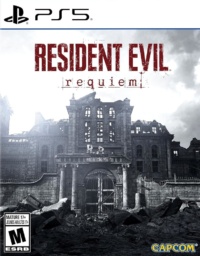 I recently finished Resident Evil Requiem, and I haven’t even really decided if I liked it or not! So I’m excited to sit down and sort out my thoughts about the game, in script format. I also just finished reading Battle Royale by Koushun Takami and wow, what a book. I really want to dig into how the BR genre lost its way, going from anti-fascist horror to capitalist gameshow.
Other than that, I’ve been writing a lot of fiction in my free time, and you may not be surprised to hear it’s primarily horror-tinged or outright spooky. I want to get together a good pile of short stories and try to get them published.
Could you name one underrated game or media work that deserves more attention from academics, such as in intellectual history or political theory, and explain why?
JUST ONE? I find that academics tend towards more obscure media, so my instinct is to say something very mainstream. I’ll split the difference and say: Disco Elysium.